



I wrote the following essay alongside GSV Founder & CEO Michael Moe. The piece was originally published on Dash Media on August 13, 2023.
“All I want to know is where I’m going to die, so I’ll never go there.” – Charlie Munger
“I want to die on Mars. Just not on Impact.” – Elon Musk
“Be courageous and be brave, and in my heart you’ll always stay. Forever young, forever young. Forever young, forever young.” – Rod Stewart
From Alexander the Great to Ponce De Leon, the Fountain of Youth has been on adventurers’ “Bucket List” since Herodotus wrote about it in the 5th Century B.C. Avoiding “kicking the bucket” has been a universal desire for even longer.

In the Old Days according to the Old Testament, people lived to a very Old Age. Adam lived until he was 930. His third son Seth made it to 912 (Seth’s brother Abel didn’t have quite such good fortune). Noah lived until he was 950 making it through floods and living with a lot of animals. His Dad, Lamech, only made it to 777 years until he passed…rumor had it that he had a two pack a day habit.

What’s timeless is human nature’s desire to be healthier, live longer and look younger…not necessarily in that order. In fact, people have shown that they will try nearly anything if it has a shot to accomplish the aforementioned objectives – leeches for seizures, cocaine for hay fever, and even cigarettes for asthma.
While sitting here today, these ideas seem beyond crazy, it’s amazing what you will believe if you want to.

Whether it’s diet fads, plastic surgery, or hair transplants, people continue the constant pursuit of a magic bullet that will make them feel healthier and younger. Moreover, increasingly science, technology, and data are having a profound effect on real longevity impact.
Magic bullet, science or fiction, this has become a massive business. The global wellness market is $4.4 trillion (that’s trillion with a T).

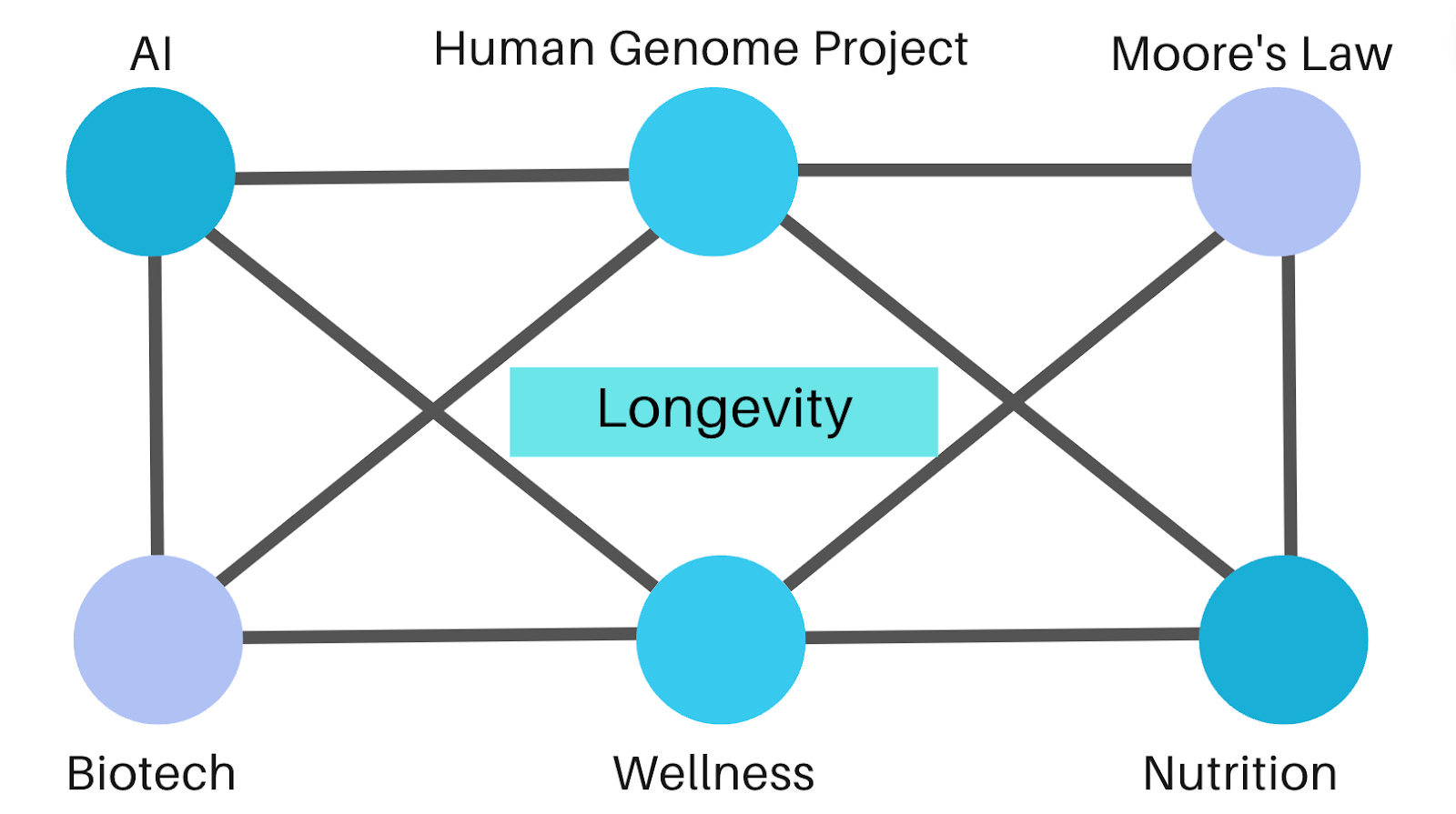
The combination of Silicon Valley’s persistent interest, innovation, and investment have changed the outlook on longevity. The convergence of advancements in computing, science, and health have been a game-changer for longevity.
There’s both top-down and bottom-up fundamentals for the huge momentum in the longevity movement. The ultra-wealthy have spent millions of dollars traveling far and wide for the best longevity treatments on Earth – whether it’s to Cal-a-vie for a spa retreat or to Central America for a stem cell transplant.

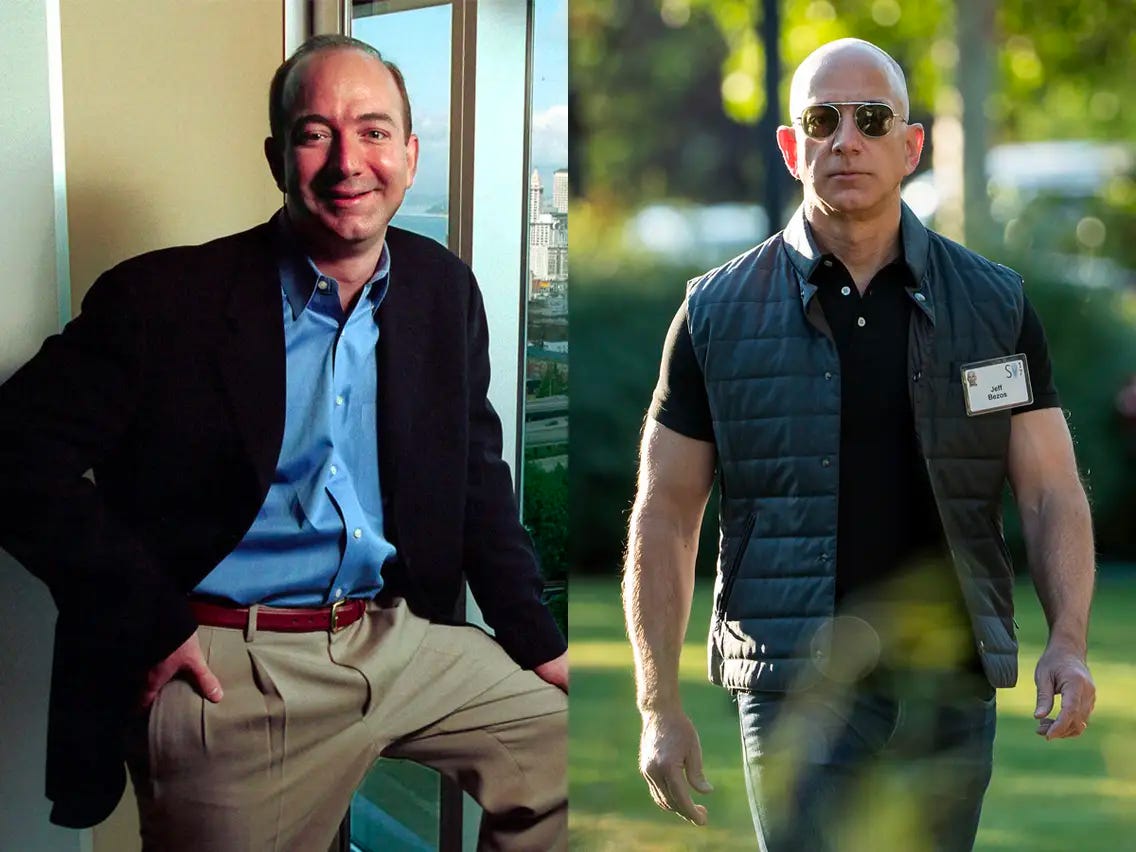
The aging titans of Silicon Valley who are looking for a few extra runs around the track (if not immortality) are putting gas on the anti-geezer fire. The cliche of the next big thing being the “Holy Grail” of XYZ…has literally become the Holy Grail. Peter Thiel, Larry Page, Jeff Bezos, and Larry Ellison are a few of the tech billionaires who are working on the one thing they can’t buy…time.
The before and after pics are stunning. Many of these guys went from being the last pick on the kickball team to physical specimens as they aged.

Daniel Ek, Brian Armstrong, and Sam Altman have each started their own companies focused on living healthier longer - Neko Health, NewLimit, and Retro Biosciences.

All of these entrepreneurs want a longer lifespan, but what they’re really after is a longer healthspan. You can be 60 years old and have the body and mind of a 90 year old…or a 30 year old. The longevity movement is all about having a robust life for as long as you can, not just having to endure old age.
Billionaires aren’t the only people who want to maximize their healthspan. Industry leaders such as Peter Attia, David Sinclair, and Andrew Huberman have gone from scientists to rock stars, educating massive audiences on how to improve their health through a variety of mediums.
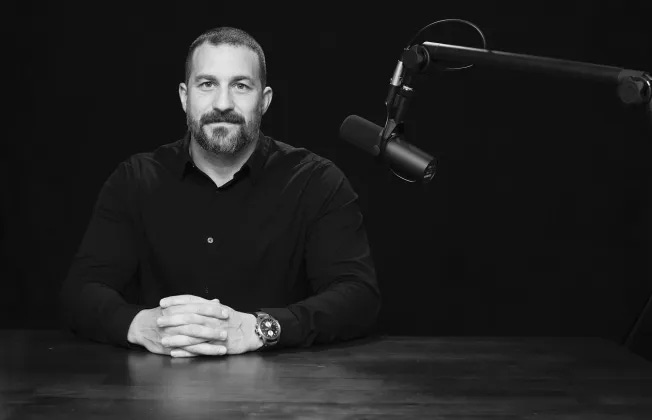
Dr. Huberman’s podcast, Huberman Lab, launched in January 2021 and is now a top 10 podcast on Spotify with massive international reach. Dr. Attia’s Outlive is the #3 non-fiction best seller in the world on Amazon.
They have become mainstream because the elixirs to the rich and famous have become available to Joe Everyman. People no longer need an Equinox membership or a personal nutritionist to achieve a healthy lifestyle when the experts are democratizing this information over YouTube and Spotify…for free.
Like many trends, longevity got another booster shot (😉) from the non-stop and heightened coverage linking morbidity to vitality.
Historically, the wealthiest people have lived the healthiest lifestyles and lived the longest.
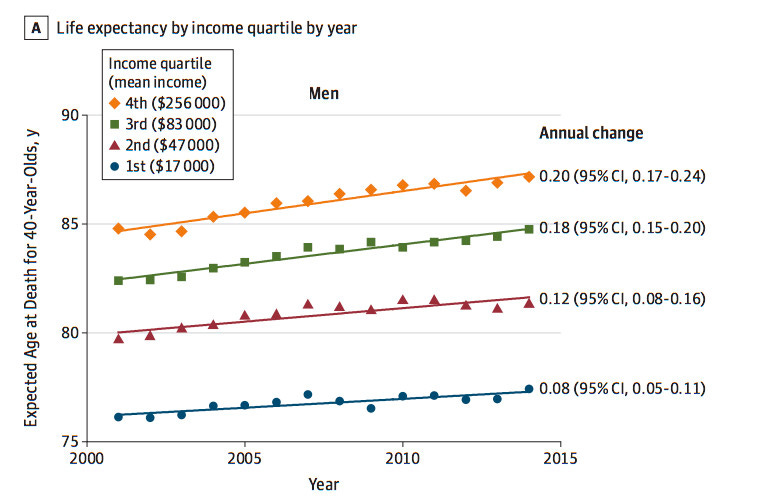
But the true democratization of longevity is around the corner. People are excited about it: most Americans would rather feel 25% healthier than 25% wealthier.

Technology is creating three tailwinds for the longevity movement.
First, it’s causing costs to plummet. Over the past 20 years, it has gotten 100,000 times cheaper to sequence a human genome. Measuring your heart rate used to require a clunky strap across your chest; now it’s embedded in nearly every smart watch.

Second, it’s accelerating the transition from prescriptive medicine to predictive, preventive, participatory, and personalized medicine (aka P4).

Third, it’s reducing friction around the three pillars of living a healthy life – sleep, exercise, and nutrition. It’s common knowledge that these are essential to a healthy life, but it’s challenging to have the discipline to maintain these habits (not everyone can be RFK Jr. after all).

As Peter Drucker famously said, what gets measured gets managed…the same is true for health and wellness. Platforms such as Whoop, Oura, Noom, and Eight Sleep have created a systematic way for people to track their health indicators.

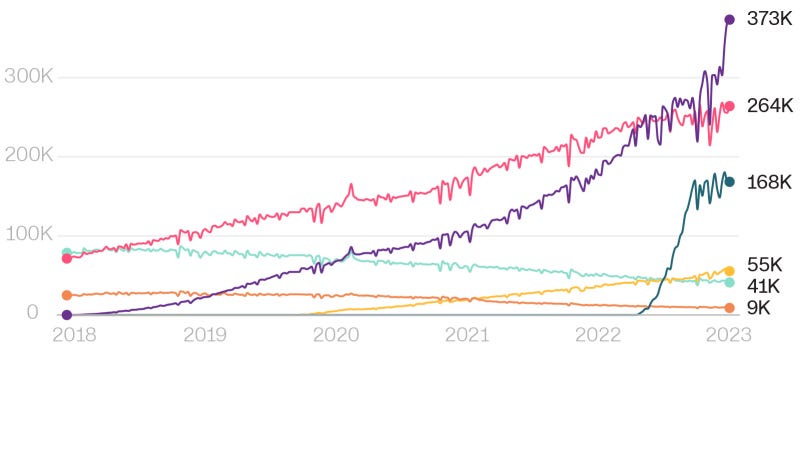
These three tailwinds have come together to unlock massive innovation in longevity. There’s no better example of the product market fit of longevity than the rise of Ozempic and Wegovy.

This week, Ozempic’s parent company Novo Nordisk went one step further and announced that these drugs also reduce the risk of heart attack and stroke by up to 20%. Prescriptions for Ozempic and Wegovy have gone vertical:
We’re incredibly excited by the success of Ozempic and Wegovy, but we don’t think the most important ingredient for longevity will be developed by a pharmaceutical company.
So where will it come from? A few weeks ago at the Campbell Trophy Summit, I saw my friend Dr. Allan Mishra , who is one of the world’s leading experts on longevity.
Allan shared that there is really one factor that is far and away the most important when it comes to achieving longevity.
The answer? Living a purpose-driven life. As fun as it is to play golf and go to the beach, living a fulfilling life means waking up every morning feeling like you’re doing what you were put on Earth to do. We alluded to this truth in EIEIO…Believe in Something back in April:
“Using infrared saunas, plunging into cold tubs, journaling, tidying up. It seems like if we could just find the discipline to master these routines, all of our problems would vanish.
Now imagine being dropped off to live out your days on a desert island completely alone. The island has all of the self-care materials you could ever dream of - a full spa, workout facility, library, you name it.
Would this feel like a paradise or a prison?”
There’s a clear need for purpose and fulfillment among young people. The most popular class at Yale in over 300 years is The Science of Well Being…a.k.a. the “Happiness Course.”
Students spend the first 15 years of their life dreaming of getting into a school like Yale, only to realize that they need a sense of purpose beyond a 4.0 GPA and a perfect SAT score.
Meanwhile, COVID and drug overdoses have caused US life expectancy to fall dramatically in the past 3 years.
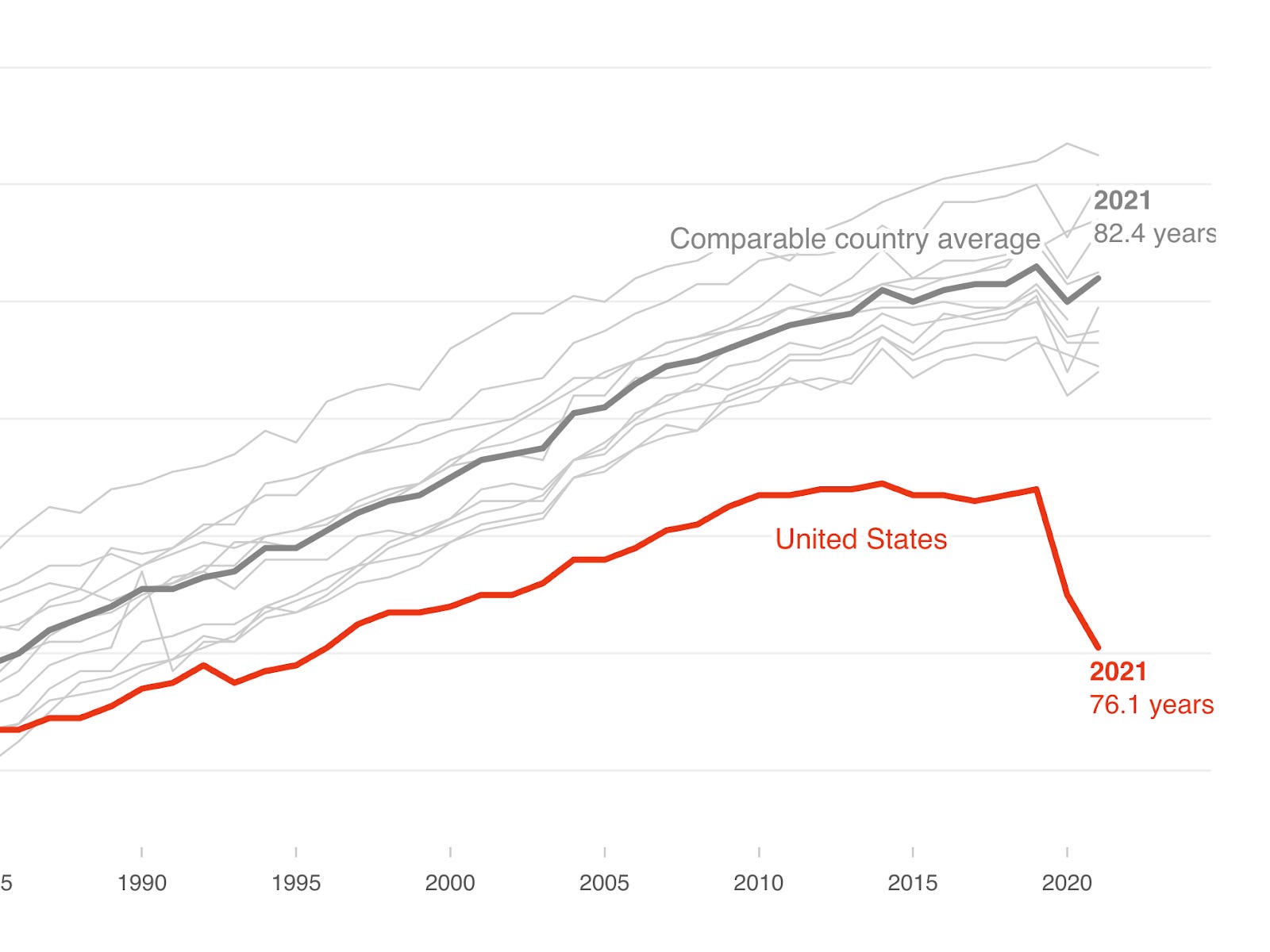
Critical problems that plague the United States (and many other parts of the world) today include loneliness, depression, anxiety, and obesity. Problems like these are often downstream of a lack of purpose in one’s life.

When people do have purpose (faith, work, country, family, etc.) they can’t help but want to extend their time on Earth. As Wired Co-Founder Kevin Kelly put it in a recent podcast, the sign of a life well-lived is being able to say on your deathbed that you have become fully yourself.
The longevity movement is a massive opportunity, and we’re bullish on where it’s heading. Science will help us live longer and more fulfilling lives, but it will never erase the fundamental human need to figure out why life is worth living.
The silver bullet for solving education is love…the silver bullet for achieving longevity is purpose.
As we end every week (but especially this week)…Make Your Dash Count!